
October 21, 2026
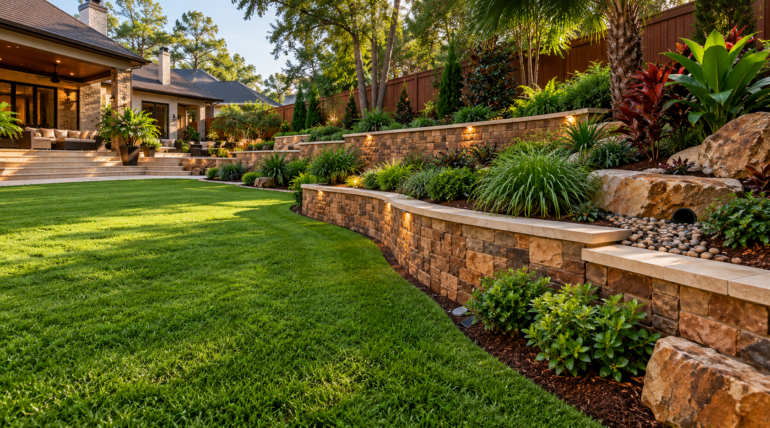
Landscape Retaining Walls Houston homeowners choose should fit their yard, soil, drainage needs, and budget. Before you build, learn how to choose the right material, plan water flow, and avoid common problems that can lead to costly repairs.
What Should You Know Before Building Landscape Retaining Walls in Houston?
A retaining wall helps hold soil in place when the ground sits at different levels. It can also create garden beds, improve the look of a sloped yard, and make some outdoor areas easier to use.
However, building a wall takes more than choosing a material and finding the right spot. Houston homeowners must consider heavy rain, water runoff, soil movement, and the shape of their yards.
Poor drainage or a weak base can cause a wall to move, crack, or lean. These problems may lead to repairs that could have been avoided with better planning.
Before starting your project, review these seven choices. They will help you understand what your yard needs and what to discuss with a landscaping contractor.
1. Identify the Main Problem Your Retaining Wall Must Solve
Start by asking yourself why you need a retaining wall. The answer will help guide the design, material choice, and project budget.
Homeowners often install retaining walls for these reasons:
- Sloped yards: Create more usable space for gardens, lawns, or seating areas.
- Soil erosion: Help hold soil in place where a wall is suitable for the site.
- Uneven garden beds: Create clear levels for plants and shrubs.
- Outdoor design: Add shape and structure to the landscape.
- Elevation changes: Create a better transition between a lawn, patio, or walkway.
For example, a sloped backyard may need a wall to create a level garden area. A yard that loses soil after heavy rain may need both a retaining wall and better water control.
These two projects may look similar, but they can have different needs.
Look for signs such as washed-out soil, bare patches on slopes, standing water, or changes in ground level. These clues can help you explain the problem to your contractor.
If soil erosion is your main concern, read our guide to retaining wall solutions for yard erosion in Houston.
2. Check Your Yard’s Slope and Drainage
Drainage is one of the most important parts of a retaining wall project in Houston. Heavy rain can cause water to collect behind a wall. This water may increase pressure on the structure and cause soil to move.
Before choosing a wall design, check your yard after rainfall.
Ask yourself:
- Does water collect near the proposed wall?
- Does rainwater flow down a slope and wash away soil?
- Are parts of the yard often wet or muddy?
- Does water flow toward your home or a nearby structure?
- Is the ground showing signs of erosion?
Your answers can help show whether drainage work is needed along with the wall.
Depending on the site, a drainage plan may include gravel behind the wall, a drainage pipe, suitable outlets, or changes to the ground slope. The right setup depends on the wall design and the way water moves across your property.
A French drain may help with some wet-yard problems, but it will not fix every drainage issue. The source of the water must be understood first.
You can learn more in our guides to French drain installation for wet yards in Houston and French drains for Houston homes.
Tip: Discuss drainage before construction begins. Adding a solution later may cost more and could require changes to the finished landscape.
3. Choose the Right Retaining Wall Material
The material affects the wall’s look, care needs, strength, and cost. The best choice depends on your yard and the type of wall you need.
Concrete Blocks
Concrete blocks are a popular choice for many landscape projects. They come in different shapes, sizes, colors, and finishes.
They can give a yard a clean, neat look and work well with many landscape designs. Some block systems are made for specific wall heights and soil loads, so the right system must be selected for the job.
Consider concrete blocks if you want a structured look that fits a modern or traditional yard.
Natural Stone
Natural stone gives a garden a more natural look. Its colors and textures can work well with trees, shrubs, planting beds, and outdoor seating areas.
Each type of stone has its own look and installation needs. The cost can also vary based on the stone selected and the work required to build the wall.
Natural stone may be a good choice if you want the wall to blend with the rest of your landscape.
Timber
Timber can create a warm, natural look and may suit some smaller landscape projects.
However, wood can decay when exposed to moisture over time. Its useful life depends on the type of wood, treatment, soil conditions, and maintenance.
Timber is not suitable for every wall, especially where the soil load or wall height creates greater demands.
How Do You Choose Between These Materials?
Before making a final choice, consider:
- Appearance: Which material best fits your home and garden?
- Durability: How will it handle moisture and normal outdoor conditions?
- Maintenance: How much care will it need over time?
- Installation needs: Does the wall design require a special base or added support?
- Budget: What are the material, labor, and preparation costs?
Ask your contractor to explain why a material suits your property. A low-cost option may not be the best value if it does not meet the needs of your yard.
4. Plan the Wall’s Height, Length, and Layout
The size of your retaining wall affects how it must be built. A short garden border has different needs from a tall wall that holds back a large amount of soil.
Before finalizing the design, think about the following:
- Height: How much soil needs to be held in place?
- Length: How much of the yard needs support?
- Location: Will the wall sit near a patio, driveway, fence, or house?
- Layout: Would a straight wall or curved design fit the yard better?
- Usable space: Will the finished area be useful for planting, walking, or outdoor seating?
In some yards, several lower walls may create attractive garden levels. This is often called terracing. However, terraced walls still need careful planning because one wall can affect the soil around another.
Do not choose wall height based on appearance alone. Taller walls and walls that support driveways or other loads may need a more detailed design or professional engineering.
You should also check whether permits or other local requirements apply before work starts.
A site visit can help your contractor understand the slope, available space, and best wall layout for your yard.
5. Plan the Base and Water Flow Before Construction
A retaining wall needs a suitable base and a way to manage water. Both should be planned before installation.
Why Does the Base Matter?
The base supports the wall and helps keep it level. Depending on the design, preparation may include excavation, removal of unsuitable soil, and installation of a properly prepared base.
If the ground is not prepared well, the wall may settle unevenly or begin to move.
The exact method depends on the wall system, soil conditions, height, and expected loads. Your contractor should explain how the base will be prepared for your project.
Why Does Drainage Matter?
Water that builds up behind a wall can put added pressure on it. Rainwater can also wash soil away from the base or damage nearby landscape areas.
A suitable plan may include:
- Drainage material behind the wall.
- A drainage pipe or suitable outlet where needed.
- Ground grading that directs surface water safely.
- Measures to reduce soil entering and blocking drainage parts.
- A safe route for water to leave the area.
The goal is to prevent water from collecting where it could harm the wall or nearby property.
For more advice, read our guide to retaining wall installation mistakes to avoid.
6. Check Nearby Structures and Access to Your Yard
Before building begins, check what is around the planned wall. Nearby structures, underground utilities, trees, and narrow access paths can affect the work.
Pay attention to:
- House foundations and garages.
- Driveways, patios, and walkways.
- Underground utility lines.
- Large trees and their roots.
- Fences and property boundaries.
- Existing walls or steep slopes.
For example, building close to a driveway may require extra care because the weight and use of the driveway can affect the wall’s design. Digging near a house or utility line also requires careful planning.
Limited access can affect how materials reach the yard and how soil is removed. This may change the work needed and the total project cost.
Ask your contractor to review these conditions before giving a final estimate.
You should also confirm any local permit, utility-location, or property rules that apply to your project. Requirements can vary by location and wall design.
Planning these details early can help reduce delays and unexpected costs.
7. Compare Quotes Before Hiring a Retaining Wall Contractor
Once you know what your yard needs, ask qualified contractors for written estimates. Do not choose a contractor based on the lowest price alone.
A quote should explain the work included and any items that may cost extra.
Before making a decision, ask these questions:
- What materials will you use? Ask for the type and finish of the wall material.
- Is site preparation included? Confirm whether excavation and base preparation are part of the price.
- What drainage work is included? Make sure the proposal explains how water will be managed.
- Is additional design work needed? Ask whether an engineer or other professional must review the project.
- What happens to the excavated soil? Check whether removal and disposal are included.
- Will the area be cleaned up? Confirm whether the contractor will restore disturbed lawn or planting beds.
- What is the expected timeline? Ask about possible delays caused by weather or site conditions.
- What warranty or written terms are provided? Review the details before signing.
It is also important to ask what the quote does not include. One contractor may include drainage and cleanup, while another may charge for these separately.
Compare the full scope of work so you understand what you are paying for.
For more details, see our retaining wall installation cost guide for Houston.
A clear estimate makes it easier to compare contractors and choose a plan that fits your yard and budget.
How Can Retaining Walls Improve Your Houston Yard?
A well-planned retaining wall can make a yard easier to use and improve its overall look.
Here are some possible benefits:
- Create more usable space: Make room for planting, lawn areas, or outdoor seating where the slope allows.
- Define garden beds: Separate plants and shrubs into neat sections.
- Help control erosion: Hold soil in place when the wall is designed for the site.
- Improve the layout: Create clear levels between different parts of the yard.
- Support a complete landscape design: Match the wall with paths, patios, plants, and other outdoor features.
The results depend on your property and the wall design. A retaining wall alone may not solve a problem caused by poor drainage or uncontrolled runoff.
If you are planning a larger yard improvement, read our guide to residential landscaping in Houston.
When Should You Contact a Retaining Wall Professional?
Some yard problems need more than a simple landscaping change. A professional assessment can help you understand the cause and choose the right next step.
Consider getting advice if you notice:
- Soil washes away after rain.
- A slope that is becoming harder to maintain.
- Water collecting behind an existing wall.
- A wall that is leaning, bulging, or showing large cracks.
- Plans to change ground levels near your home or driveway.
- A need to create a level area on a steep slope.
If an existing wall shows sudden movement or appears unsafe, keep people away from the area and seek qualified help promptly.
A contractor can review the site and help determine whether the project needs drainage work, repairs, a new wall, or further structural assessment.
You can also read our guide on signs you need a retaining wall contractor in Houston.
Conclusion:
The right retaining wall starts with a clear plan. You need to understand your yard’s slope, choose suitable materials, manage water flow, and prepare the site before construction begins.
Whether you want to create a garden area, make better use of a sloped yard, or address soil erosion, these decisions can help you plan the project with greater confidence.
Frankie Garcia Landscape can help you discuss your landscaping goals and understand the work your property may need.
Contact Frankie Garcia Landscape today to discuss your retaining wall project and request an estimate.