
September 2, 2025
Introduction
Houston homeowners know that heavy rain is more than just a passing inconvenience; it can quickly turn a beautiful yard into a waterlogged mess. Poor drainage doesn’t just ruin curb appeal; it threatens foundations, landscaping, and even indoor spaces when moisture creeps in. That’s why plumbing-adjacent landscaping solutions, like French drains, are essential for protecting your property. In this spotlight, we’ll explore how French drains work, why Houston’s unique climate makes them a necessity, and the clear signs your yard may need one.
1. The Hidden Force Beneath: Understanding Groundwater Movement
Houston’s climate and soil tell a story that many homeowners overlook. Frequent heavy downpours, combined with clay-rich soils that swell when wet and shrink when dry, create a challenging environment for managing moisture. This naturally shifting soil can push against foundations and cause persistent flooding in yards especially in flat, poorly drained landscapes.
Groundwater moves under pressure through soil, influenced by gravity and topography. Where it meets an obstruction like compacted soil, hardscape, or sloped terrain it can accumulate and resurface as pooling or soggy patches in lawns. This relentless pressure on structures, seen as hydrostatic pressure, can lead to cracks in foundations, water intrusion, and even mold growth.
2. French Drains: What They Are and How They Work
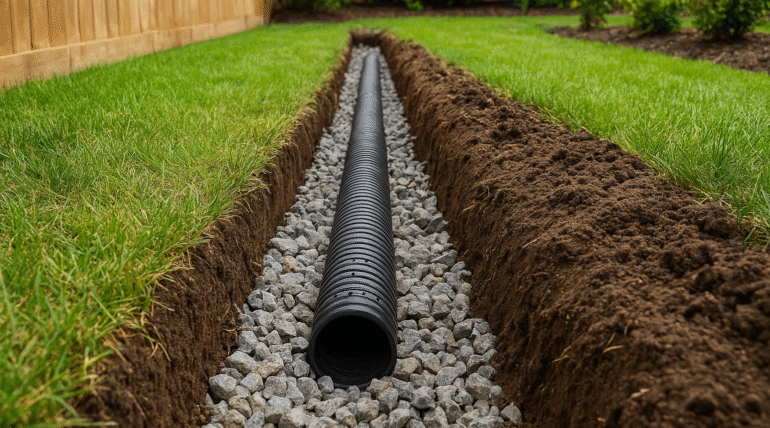
A French drain is a smart and subtle security system for your yard. It consists of a trench filled with gravel or rock and often houses a perforated pipe that collects and redirects water safely away from problem zones.
Key components:
- Gravel or drainage rock: Surrounds the pipe and helps water flow freely.
- Perforated pipe: Allows water to enter the system from the trench.
- Filter fabric (geotextile): Keeps soil and debris out to prevent clogging.
- Proper slope: Must be at least 1% (1 inch fall for every 10 feet) so water flows downhill.
When installed correctly, the system reduces hydrostatic pressure, keeps water away from your home’s foundation, minimizes erosion, and preserves the aesthetics of your yard.
At Frankie Garcia Landscape, French drains are installed below the sub-floor or, ideally, beneath the foundation footings; this strategic placement intercepts migrating groundwater before it can become problematic.
3. Why Houston Homes Especially Benefit from French Drains
Houston’s Soil & Weather Challenges
- Clay-heavy soil expands and contracts dramatically, destabilizing foundations.
- Flat terrain leads to poor natural water runoff, causing persistent pooling.
Because of this, Houston demands proactive drainage solutions. French drains emerge as an effective, long-term defense against water damage for both homes and landscaping.
Multifaceted Benefits
- Foundation protection: Redirects water away from home structures, reducing cracks and leaks.
- Landscape preservation: Mitigates erosion and keeps planting areas healthy.
- Long-term resilience: Low maintenance and durable when professionally installed.
4. Signs Your Yard Needs a French Drain When to Call in the Experts
Knowing when to intervene makes all the difference. According to drainage specialists, you should look for:
- Standing water lingering for hours or days
- Squishy or spongy ground underfoot
- Lush or overgrown vegetation, especially near foundations signaling underground moisture sources
- Cracks or bulging in foundations and retaining walls due to hydrostatic pressure
- Frequent mold or dampness in basements or crawlspaces
These red flags are your yard’s way of asking for help.
5. Best Practices for Effective Drainage and Avoiding Common Mistakes
While the concept of a French drain is straightforward, proper execution is key. Best practices include:
- Use of 1½-inch or larger round drain rock, not fine gravel or pea gravel which can clog the system
- Avoid fully wrapping the pipe in fabric, as this traps silt and encourages clogging; fabric should cover gravel, not the pipe itself
- Ensure correct slope (0.5%–1%) too little slope impedes flow and leads to standing water
- Provide a good discharge point like a dry well, storm drain, or vegetated area it’s pointless if the water has nowhere to go
- Handle downspout water wisely don’t dump it directly into the system without proper dispersion, or you could overwhelm the drain
- Avoid placing heavy objects above the drain, which can crush pipe or compact gravel and reduce efficiency
6. French Drain Options: Custom Solutions for Your Yard
Frankie Garcia Landscape offers tailored French drain services for Houston homeowners, including:
- Expert site evaluation
- Customized design
- Precision trench placement under sub-floor or footings
- Professional installation using quality materials
- Ongoing maintenance and support to ensure long-term performance
This level of detail ensures your drainage system performs optimally for years to come.
7. Final Thoughts: Water Management through Smart Landscaping
In Houston’s challenging climate, water management can make or break both your home’s structural health and your yard’s beauty. A well-designed French drain is more than a trench; it’s peace of mind.
Key takeaways:
- Groundwater movement is both powerful and subtle; ignoring it invites problems.
- French drains offer an effective, proven method to channel water away from vulnerable areas.
- Recognizing yard distress signs early can prevent costly repairs.
- Proper design and installation using the right materials, slope, and discharge strategy makes all the difference.
- Trusting professionals like Frankie Garcia Landscape ensures that your system is both effective and long-lasting.
Ready to Safeguard Your Yard?
Don’t wait for the next heavy rain to reveal drainage weaknesses. Contact Frankie Garcia Landscape for a consultation and discover how a custom French drain solution can protect your home, enhance your landscape, and provide long-term value.