
November 10, 2025
Introduction
When designing a garden, pathways don’t have to be purely utilitarian. A thoughtfully laid stepping stone path can serve as a signature design element and a practical walkway even in wet weather. In this blog we’ll explore creative design ideas, material selections, how to integrate lighting and turf, and tips for making practical walkways for rainy seasons. We’ll also relate everything back to the services offered by Frankie Garcia Landscape in Houston, whose website emphasises stepping stones as part of their hardscape offerings.
1. Why Use Stepping Stone Paths?
Stepping stone paths offer several advantages:
- Charm & character: Unlike plain concrete slabs, individual stones create a rhythm, texture and personality in your garden.
- Functionality: They guide visitors, define zones (like from patio to lawn, or along a flower bed).
- Low-maintenance: Depending on the material, stepping stones can require less upkeep than full paving.
- Rain-ready: With the right design, they can provide safe walkways even when it’s wet.
In a climate like Houston (or any area with heavy rainfall or moist conditions), stepping stones can play a key role in managing water flow, reducing puddles, and preserving turf or garden beds.
2. Design Ideas for Stepping Stone Paths
a) Casual “meander” path
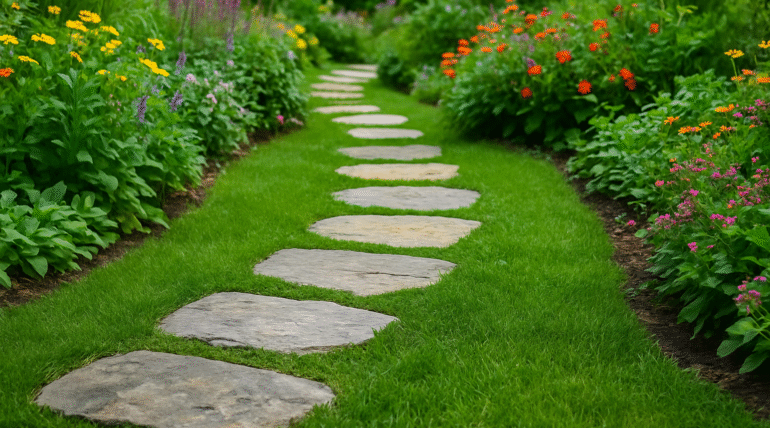
Instead of a straight route, allow the stepping stone path to gently curve through a lawn or garden bed. This creates a more relaxed, natural feeling. Use large irregular flagstones spaced a few inches apart, set into turf or ground-cover. The gap between stones allows grass or plants to soften the transition.
b) Formal “stepping-stone grid”
For a more modern or minimalist garden, use uniform rectangular or square stones laid in a grid pattern across turf or gravel. The clean geometry gives a crisp look.
c) Mixed-material contrast
Combine natural stone stepping stones with other hardscape elements — e.g., mix in wood sleepers, gravel infill, or a border of pavers. The contrast adds visual interest and delineates the path more clearly.
d) Turf-embedded stones
Embed stepping stones directly into the turf so that the grass grows right up to the edge of each slab. This makes the path feel integrated with the lawn rather than imposed on it.
e) Raised stepping stones
In wetter areas, slightly raise each stone (on mortar or gravel bed) so that in rainy seasons the surface stays above water-level and remains usable.
3. Choosing the Right Materials
When selecting materials for stepping stone paths, consider durability, texture, colour, and compatibility with turf and lighting.
Common material options:
- Natural flagstone (e.g., slate, limestone, sandstone): Offers a natural look, can be irregular shapes, textures vary.
- Cut stone pavers (granite, bluestone): More uniform, polished look, easier to fit into formal layouts.
- Concrete stepping stones or slabs: Cost-effective and can be cast in many shapes, but may look less natural.
- Recycled materials / old bricks / reclaimed stone: Adds character and sustainability.
- Wood or composite “steppers”: For a more organic look, but may require more maintenance in wet climates.
Material choice considerations:
- Slip-resistance: Especially important in a rainy season. Choose materials with texture or finish that reduce slipping.
- Thickness and stability: Stones should be thick enough to avoid cracking under foot traffic and set on a stable base to avoid shifting.
- Colour and tone: Lighter stones reflect more light in evening; darker stones may warm up more in sun. Choose tones that complement your house façade or garden palette.
- Compatibility with turf: If you’re embedding stones in turf, ensure the edge detail is neat and the grass has enough soil around each stone to thrive.
- Drainage: A good base (gravel or sand) ensures water drains through rather than pooling on or around the stone.
4. Integration with Landscape Lighting & Turf
Lighting
Lighting transforms a stepping stone path from functional to enchanting and increases safety at night.
- Low-voltage LED path lights: Place along the edges of the path to softly illuminate the stones and turf edges.
- In-stone lighting: Small recessed LED fixtures can be set flush into larger stones, creating a “lit stepping stone” effect.
- Uplights from adjacent planting beds: This casts soft light onto the stones and grass, producing dramatic shadows and depth.
- Solar lights: For ease of installation, though reliability varies.
- Lighting design tip: Keep lights low and subtle the goal is to highlight the path without overpowering the garden’s ambience.
Turf integration
When a stepping stone path runs through or alongside turf, here are a few best practices:
- Edge detail: A clean edge (e.g., metal or cured concrete cut) between turf and stone prevents the grass from overgrowing onto the stone and keeps the path tidy.
- Spacing: Stones spaced 18-24 inches (45-60 cm) apart allow for a comfortable step while allowing grass to grow between them.
- Leveling: Stones should be flush or slightly above turf level to avoid tripping hazards and to help prevent grass from overshadowing the stone.
- Maintenance: Mow carefully along the path edges, and consider trimming grass between stones during the growing season.
- Drainage: Ensure the turf slopes slightly away from stones, or consider a permeable base, so water doesn’t collect on the path.
5. Practical Walkways for Rainy Seasons
In rainy climates, designing the stepping stone path with water-ready features ensures longevity and safety.
Drainage & base preparation
- Excavate beneath the stepping stone path to a depth of 4-6 inches.
- Lay a layer of compacted gravel or crushed rock for drainage.
- On top of that, a thin layer of sand or fine gravel can be used to bed the stone.
- Slope the path slightly (about 1 % grade) so that water runs off the surface.
- Consider using gap infill (gravel, decorative pebbles) between stones to assist drainage.
Anti-slip and safety
- Textured natural stone or concrete with aggregate finish helps prevent slipping.
- In shaded or moss-prone areas, choose stones that handle moisture well and clean them periodically.
- Ensure path width is sufficient (minimum about 2.5–3 feet / 75–90 cm) to allow comfortable navigation with rain gear or carrying items.
Turf and water resilience
- If the stones are embedded in turf, the grass between stones helps absorb rainfall and reduces surface water.
- Use turf varieties that are resilient to foot traffic and moisture (especially relevant in wetter months).
- After heavy rain, inspect the path to ensure no stones have shifted and turf is healthy around the edges.
Maintenance tips
- Keep joints and infill clear of debris to maintain drainage.
- Flush or clean the stepping stone surface if algae or moss build up in damp areas.
- Monitor the turf edge for encroachment and trim as needed.
- Check the base periodically if stones settle due to water washing underneath them; fix promptly to avoid uneven surfaces.
6. Bringing It All Together with Frankie Garcia Landscape
At Frankie Garcia Landscape, stepping stones are explicitly listed as part of their hardscape service suite highlighting their relevance for quality garden pathways. If you’re in the Houston area (or elsewhere with similar climate concerns), working with professionals ensures the right material choice, base preparation, drainage integration and lighting installation.
When you engage a service like theirs, you benefit from:
- Expert design to match the stepping stone path with your home architecture and garden style
- Skilled installation with proper drainage and base layer for rainy season resilience
- Integration of turf, lighting and landscape features so the path looks holistic rather than an afterthought
- Maintenance planning so the path remains safe and attractive over time
Conclusion
A stepping stone path is more than just a walkway; it’s an opportunity to add beauty, structure and year-round usability to your garden. With thoughtful design, the right materials, integrated lighting and attention to rainy-season practicality, you’ll create a charming and functional path that enhances your outdoor space.
Ready to bring the stepping stone vision to life? Contact Frankie Garcia Landscape today to plan your custom pathway with expert design, installation and finishing touches. Your garden’s next chapter starts with stepping stones.